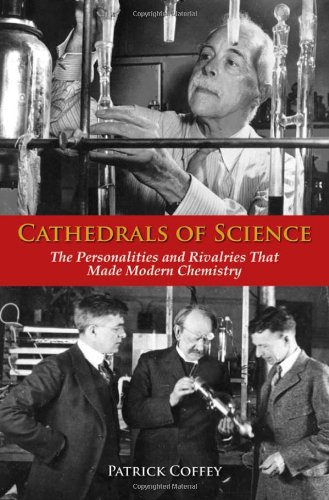
Cathedrals of Science: The Personalities and Rivalries That Made Modern Chemistry
by Patrick Coffey
No club is reading this yet — be the first to start one
Coffey deals with moral and societal issues as well. These same scientists were the first to be seen by their countries as military assets. Fritz Haber, dubbed the "father of chemical warfare," pioneered the use of poison gas in World War I-vividly described-and Glenn Seaborg and Harold Urey were leaders in World War II's Manhattan Project; Urey and Linus Pauling worked for nuclear disarmament after the war. Science was not always fair, and many were excluded. The Nazis pushed Jewish scientists like Haber from their posts in the 1930s. Anti-Semitism was also a force in American chemistry, and few women were allowed in; Pauling, for example, used his influence to cut off the funding and block the publications of his rival, Dorothy Wrinch.
Cathedrals of Science paints a colorful portrait of the building of modern chemistry from the late 19th to the mid-20th century.
Discuss Cathedrals of Science: The Personalities and Rivalries That Made Modern Chemistry with other readers
Join or start a book club for Cathedrals of Science: The Personalities and Rivalries That Made Modern Chemistry on Readfeed. Live chat, shared reading progress, and AI discussion questions — free to get started.
Frequently asked questions
How do I join a book club for Cathedrals of Science: The Personalities and Rivalries That Made Modern Chemistry?
Sign up free on Readfeed, then browse public clubs or start your own club with Cathedrals of Science: The Personalities and Rivalries That Made Modern Chemistry as the current read. Invite friends with a share link and discuss together with live chat and AI discussion questions.
Can I discuss Cathedrals of Science: The Personalities and Rivalries That Made Modern Chemistry with other readers online?
Yes. Readfeed book clubs let you chat live, share progress, and join discussions about Cathedrals of Science: The Personalities and Rivalries That Made Modern Chemistry with readers worldwide — whether your club is virtual, in-person, or hybrid.
Is Readfeed free?
Yes. Creating an account and joining book clubs is free. Sign up to find readers who love the same books and start discussing today.