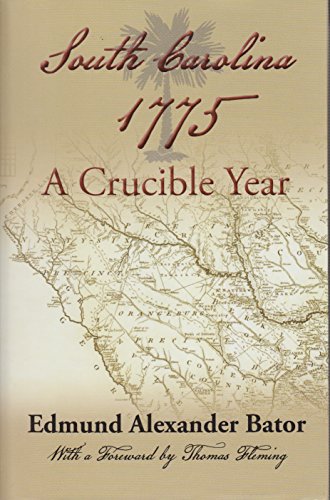
"South Carolina 1775 – A Crucible Year" is a story of ambition and ego among conscience stricken men in the province of South Carolina on the eve of revolution, men who were still uncertain that independence from England, whether peaceful or violent, was the correct path to follow. After the First Continental Congress issued its Articles of Association in October 1774, asking American colonies to unite in common cause to implement a trade boycott against Great Britain and its Coercive Acts, enthusiasm varied greatly among Carolinians. The First Provincial Congress of South Carolina, as a revolutionary government, was organized by low country Carolinians of the Charleston area, who soon realized that back country planters would have to be included among delegates elected to this congress. Few back country farmers had ever before participated in provincial governments of South Carolina. Indeed, they were often skeptical about the motivations of Charleston aristocrats. However, by 1775, the back country made up roughly 70-80% of the royal province’s population. They could not and would not be ignored. Back country Carolinians were more recalcitrant in relinquishing ties to the mother country. The implementation of association soon ran into the unintended consequences of political opportunism and vanity between men of honor, whether Rebels or Loyalists, with regard to a common cause. This narrative is a well-documented history of the political controversy that emerged between low and back country leaders, discussing in their own words the agonizing differences that arose between them, and the manner in which crisis situations on the road to revolution were handled – situations that bordered on civil war. Characters in the drama include John Caldwell, William Campbell, the Cunninghams, William Henry Drayton, Thomas Fletchall, Moses Kirkland, Henry Laurens, James Mayson, Richard Pearis, Richard Richardson, William Thomson, and Andrew Williamson. While personal ambition, pride and prejudice motivated the egos of Carolinians, it was still in good conscience that most Rebels and Loyalists defended their beliefs in this crucible year of 1775. Their words and deeds, offered in this narrative, provide exceptional insight into the nature of personal feelings on value issues such as duty, honor and integrity regarding separation from the mother country. These values still resonate with us today, and still remain as important a factor in political thought as they were in the days of the founders of modern South Carolina.