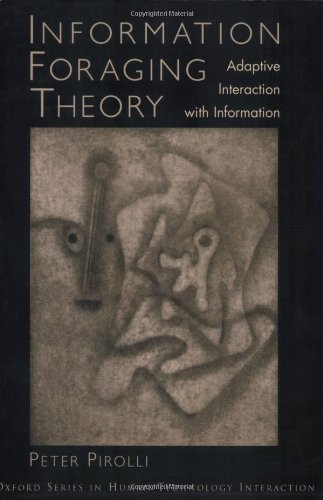
Information Foraging Theory: Adaptive Interaction with Information (Human Technology Interaction Series)
by Peter L. T. Pirolli
No club is reading this yet — be the first to start one
Thus, it is fortunate that a new field of research, Adaptive Information Interaction (AII), is becoming possible. AII centers on the problems of understanding and improving human-information interaction. It is about how people will best shape themselves to their information environments, and how information environments can best be shaped to people. Its roots lie in human-computer interaction (HCI), information retrieval, and the behavioral and social sciences.
This book is about Information Foraging Theory (IFT), a new theory in Adaptive Information Interaction that is one example of a recent flourish of theories in adaptationist psychology that draw upon evolutionary-ecological theory in biology. IFT assumes that people (indeed, all organisms) are ecologically rational, and that human information-seeking mechanisms and strategies adapt the structure of the information environments in which they operate. Its main aim is to create technology that is better shaped to users. Information Foraging Theory will be of interest to student and professional researchers in HCI and cognitive psychology.
Discuss Information Foraging Theory: Adaptive Interaction with Information (Human Technology Interaction Series) with other readers
Join or start a book club for Information Foraging Theory: Adaptive Interaction with Information (Human Technology Interaction Series) on Readfeed. Live chat, shared reading progress, and AI discussion questions — free to get started.
Frequently asked questions
How do I join a book club for Information Foraging Theory: Adaptive Interaction with Information (Human Technology Interaction Series)?
Sign up free on Readfeed, then browse public clubs or start your own club with Information Foraging Theory: Adaptive Interaction with Information (Human Technology Interaction Series) as the current read. Invite friends with a share link and discuss together with live chat and AI discussion questions.
Can I discuss Information Foraging Theory: Adaptive Interaction with Information (Human Technology Interaction Series) with other readers online?
Yes. Readfeed book clubs let you chat live, share progress, and join discussions about Information Foraging Theory: Adaptive Interaction with Information (Human Technology Interaction Series) with readers worldwide — whether your club is virtual, in-person, or hybrid.
Is Readfeed free?
Yes. Creating an account and joining book clubs is free. Sign up to find readers who love the same books and start discussing today.