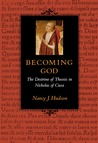
Becoming God the Doctrine of Theosis in Nicholas of Cusa

Becoming God the Doctrine of Theosis in Nicholas of Cusa

by Nancy J. Hudson

218 pages· 2007· ISBN 9780813214726

Browse books you can read free on Readfeed

No club is reading this yet — be the first to start one

1 reader has this book on their Readfeed shelves

Start a club free
About
The doctrine of theosis means a salvation that is the deification of the saved. The saved actually become God. This unusual doctrine lies at the heart of Nicholas of Cusa's (1401-1464) mystical metaphysics. It is here examined for the first time as a theme in its own right, along with its implications for Cusanus's doctrine of God, his theological anthropology, and his epistemology. Nancy Hudson opens her book with a historical introduction of the term ""theosis"" from its roots in the Greek fathers (Gregory of Nyssa and Maximus the Confessor) to its mature development in Pseudo-Dionysius. The two interdependent movements of divine self-manifestation and divine mystery, immanence and transcendence, are presented as the dynamic nexus out of which theosis arises. Divine self-manifestation is explored as both a prerequisite and a mode of theosis. The negative theology that results from divine mystery highlights the limitations of human reason as well as the human mind's potential for being the image of God. The Christological character of theosis is found in Nicholas of Cusa's doctrine of Christ as the Word of God, his understanding of the ascent of the intellect to divine Wisdom, and his concept of divine sonship. Nicholas of Cusa's emphasis on the intellect in salvation is controversial because it appears to privilege the mind over the body, undermine the goodness of creation, and ignore the place of repentance from sin in salvation. In short, Nicholas of Cusa's doctrine of theosis reveals the strong influence of Greek philosophy. At issue is his orthodoxy and whether he replaces Christian doctrine with Greek thought, while maintaining only the language of Christian theology. The thorough analysis of theosis in this book reveals that Nicholas of Cusa does indeed follow tradition, though it is the tradition of the Eastern church.

Discuss Becoming God the Doctrine of Theosis in Nicholas of Cusa with other readers

Join or start a book club for Becoming God the Doctrine of Theosis in Nicholas of Cusa on Readfeed. Live chat, shared reading progress, and AI discussion questions — free to get started.

Frequently asked questions

How do I join a book club for Becoming God the Doctrine of Theosis in Nicholas of Cusa?

Sign up free on Readfeed, then browse public clubs or start your own club with Becoming God the Doctrine of Theosis in Nicholas of Cusa as the current read. Invite friends with a share link and discuss together with live chat and AI discussion questions.

Can I discuss Becoming God the Doctrine of Theosis in Nicholas of Cusa with other readers online?

Yes. Readfeed book clubs let you chat live, share progress, and join discussions about Becoming God the Doctrine of Theosis in Nicholas of Cusa with readers worldwide — whether your club is virtual, in-person, or hybrid.

Is Readfeed free?

Yes. Creating an account and joining book clubs is free. Sign up to find readers who love the same books and start discussing today.