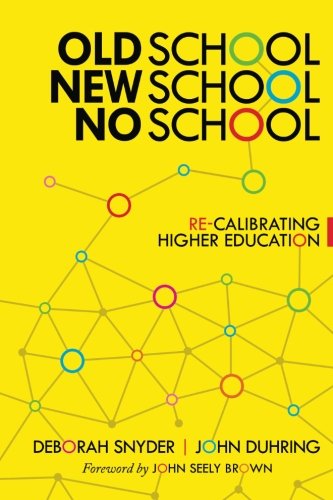
Old School, New School, No School: Re-Calibrating Higher Education
by Deborah Snyder
No club is reading this yet — be the first to start one
Whether they start as freshmen or transfer in after gaining real-world experience, today's students invent new, professional versions of themselves through the practices they put in place in college and refine thereafter. Regardless of what is assigned in class, students succeed when they create roles for themselves to play with their peers. By doing so, they discover fresh possibilities and colleagues with whom to actualize their dreams. Colleges can better prepare students for the accelerating changes taking place in the economy, the environment and in society by recognizing and honoring the ways students learn, how they mentor each other, and how they adapt themselves to the challenges they face. These processes have not been well-defined or deeply explored, until now.
Old School, New School, No School guides those college administrators, faculty, counselors, and parents who seek to prepare students for the accelerating changes taking place in the world around them. The book promotes practical methods for networks of students to engage in hands-on, interdisciplinary experiences on campus, online, and in the community, including:
- Examples of proficient, resilient and versatile “new school” students who have put into play the communications, problem-solving and critical thinking skills demanded by 21st Century employers, relationships and societies.
- Methods that integrate real-world projects, meetups, jams, hackathons, and agile development processes into curricular activities, enabling undergraduates with a wide variety of skill sets to find their voice, pitch ideas, recruit talent and embark on shared journeys.
- Suggestions for additional research, with pointers to contextual evidence and links to articles and video resources that support adoption of “new school” approaches.
Ultimately, the book offers a pragmatic perspective for those charged with preparing students to live and work through change. As stated in the foreword by John Seely Brown: "We need to prepare our students to thrive in a whitewater world—to be able to view the constant changes and new kinds of entanglements as opportunities for learning."
Discuss Old School, New School, No School: Re-Calibrating Higher Education with other readers
Join or start a book club for Old School, New School, No School: Re-Calibrating Higher Education on Readfeed. Live chat, shared reading progress, and AI discussion questions — free to get started.
Frequently asked questions
How do I join a book club for Old School, New School, No School: Re-Calibrating Higher Education?
Sign up free on Readfeed, then browse public clubs or start your own club with Old School, New School, No School: Re-Calibrating Higher Education as the current read. Invite friends with a share link and discuss together with live chat and AI discussion questions.
Can I discuss Old School, New School, No School: Re-Calibrating Higher Education with other readers online?
Yes. Readfeed book clubs let you chat live, share progress, and join discussions about Old School, New School, No School: Re-Calibrating Higher Education with readers worldwide — whether your club is virtual, in-person, or hybrid.
Is Readfeed free?
Yes. Creating an account and joining book clubs is free. Sign up to find readers who love the same books and start discussing today.