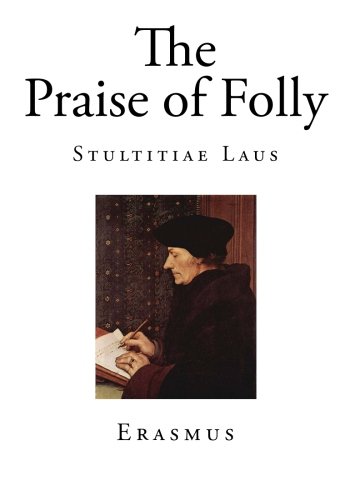
The Praise of Folly: Stultitiae Laus (Classic Books - Erasmus - Protestant Reformation)

The Praise of Folly: Stultitiae Laus (Classic Books - Erasmus - Protestant Reformation)

by Erasmus

76 pages· 2014· ISBN 9781500959371
About
A Worldwide Best Seller. The Praise of Folly - Erasmus - Translated by John Wilson. 'Erasmus's Praise of Folly should be on every civilised bookshelf'. 'Subversive'. 'It's clever and very well thought out'. In Praise of Folly - Latin: Stultitiae Laus, is an essay written in Latin in 1509 by Desiderius Erasmus of Rotterdam and first printed in 1511. The essay was inspired by De Triumpho Stultitiae, written by the Italian humanist Faustino Perisauli, born at Tredozio, near Forlì. Erasmus revised and extended the work, which he originally wrote in the space of a week while sojourning with Sir Thomas More at More's estate in Bucklersbury. In Praise of Folly is considered one of the most notable works of the Renaissance and played an important role in the beginnings of the Protestant Reformation. In Praise of Folly starts off with a satirical learned encomium, in which Folly praises herself, after the manner of the Greek satirist Lucian, whose work Erasmus and Sir Thomas More had recently translated into Latin, a piece of virtuoso foolery; it then takes a darker tone in a series of orations, as Folly praises self-deception and madness and moves to a satirical examination of pious but superstitious abuses of Catholic doctrine and corrupt practices in parts of the Roman Catholic Church—to which Erasmus was ever faithful—and the folly of pedants. Erasmus had recently returned disappointed from Rome, where he had turned down offers of advancement in the curia, and Folly increasingly takes on Erasmus' own chastising voice. The essay ends with a straightforward statement of Christian ideals. Erasmus was a good friend of More, with whom he shared a taste for dry humor and other intellectual pursuits. The title "Morias Encomium" can also be read as meaning "In praise of More." The double or triple meanings go on throughout the text. The essay is filled with classical allusions delivered in a style typical of the learned humanists of the Renaissance. Folly parades as a goddess, offspring of Plutus, the god of wealth and a nymph, Freshness. She was nursed by two other nymphs Inebriation and Ignorance, her faithful companions include Philautia (self-love), Kolakia (flattery), Lethe (forgetfulness), Misoponia (laziness), Hedone (pleasure), Anoia (madness), Tryphe (wantonness) and two gods Komos (intemperance) and Eegretos Hypnos (dead sleep). Folly praises herself endlessly, arguing that life would be dull and distasteful without her. Of earthly existence, Folly pompously states, "you'll find nothing frolic or fortunate that it owes not to me."

Discuss The Praise of Folly: Stultitiae Laus (Classic Books - Erasmus - Protestant Reformation) with other readers

Join or start a book club for The Praise of Folly: Stultitiae Laus (Classic Books - Erasmus - Protestant Reformation) on Readfeed. Live chat, shared reading progress, and AI discussion questions — free to get started.

Frequently asked questions

How do I join a book club for The Praise of Folly: Stultitiae Laus (Classic Books - Erasmus - Protestant Reformation)?

Sign up free on Readfeed, then browse public clubs or start your own club with The Praise of Folly: Stultitiae Laus (Classic Books - Erasmus - Protestant Reformation) as the current read. Invite friends with a share link and discuss together with live chat and AI discussion questions.

Can I discuss The Praise of Folly: Stultitiae Laus (Classic Books - Erasmus - Protestant Reformation) with other readers online?

Yes. Readfeed book clubs let you chat live, share progress, and join discussions about The Praise of Folly: Stultitiae Laus (Classic Books - Erasmus - Protestant Reformation) with readers worldwide — whether your club is virtual, in-person, or hybrid.

Is Readfeed free?

Yes. Creating an account and joining book clubs is free. Sign up to find readers who love the same books and start discussing today.