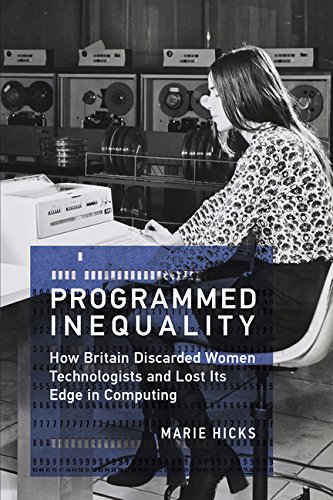
Programmed Inequality: How Britain Discarded Women Technologists and Lost Its Edge in Computing (History of Computing)
by Marie Hicks
In Programmed Inequality, Marie Hicks explores the story of labor feminization and gendered technocracy that undercut British efforts to computerize. That failure sprang from the government's systematic neglect of its largest trained technical workforce, simply because they were women. Women were a hidden engine of growth in high technology from World War II to the 1960s. As computing experienced a gender flip, becoming male-identified in the 1960s and 1970s, labor problems grew into structural ones and gender discrimination caused the nation's largest computer user -- the civil service and sprawling public sector -- to make decisions that were disastrous for the British computer industry and the nation as a whole.
Drawing on recently opened government files, personal interviews, and the archives of major British computer companies, Programmed Inequality takes aim at the fiction of technological meritocracy. Hicks explains why, even today, possessing technical skill is not enough to ensure that women will rise to the top in science and technology fields. Programmed Inequality shows how the disappearance of women from the field had grave macroeconomic consequences for Britain, and why the United States risks repeating those errors in the twenty-first century.
Cover Photo: Cathy Gillespie performs the initial program load on an IBM computer at the British Central Electricity Generating Board, c. 1970. Photo courtesy of Cathy Gillespie.
Discuss Programmed Inequality: How Britain Discarded Women Technologists and Lost Its Edge in Computing (History of Computing) with other readers
Join or start a book club for Programmed Inequality: How Britain Discarded Women Technologists and Lost Its Edge in Computing (History of Computing) on Readfeed. Live chat, shared reading progress, and AI discussion questions — free to get started.
Frequently asked questions
How do I join a book club for Programmed Inequality: How Britain Discarded Women Technologists and Lost Its Edge in Computing (History of Computing)?
Sign up free on Readfeed, then browse public clubs or start your own club with Programmed Inequality: How Britain Discarded Women Technologists and Lost Its Edge in Computing (History of Computing) as the current read. Invite friends with a share link and discuss together with live chat and AI discussion questions.
Can I discuss Programmed Inequality: How Britain Discarded Women Technologists and Lost Its Edge in Computing (History of Computing) with other readers online?
Yes. Readfeed book clubs let you chat live, share progress, and join discussions about Programmed Inequality: How Britain Discarded Women Technologists and Lost Its Edge in Computing (History of Computing) with readers worldwide — whether your club is virtual, in-person, or hybrid.
Is Readfeed free?
Yes. Creating an account and joining book clubs is free. Sign up to find readers who love the same books and start discussing today.