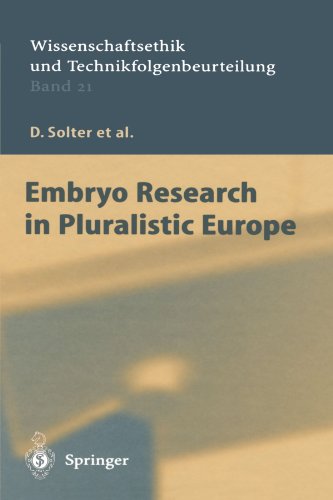
Embryo Research in Pluralistic Europe (Ethics of Science and Technology Assessment)
by D. Solter, D. Beyleveld, M.B. Friele, J. Holówka, H. Lilie, R. Lovell-Badge, C. Mandla, U. Martin, R. Pardo Avellaneda
No club is reading this yet — be the first to start one
Recent advances in techniques and understanding in the fields of genetics, embryology and reproductive biology have opened up new ways to treat a wide range of medical problems. They range from new options for infertility treatment and pre-implantation genetic diagnosis to stem-cell-based therapies for debilitating diseases. Since all these approaches involve the manipulation of human gametes, embryos or embryonic cells, and could also permit more contentious uses, they have stimulated a controversial debate as to what aims are desirable and to what extent experiments on human embryos are morally permissible, if permissible at all. The situation is further complicated by the fact that scientific projects are increasingly realized through international co-operation and that patients are increasingly ready to seek morally contentious medical treatment wherever it is available and thus to bypass national legislation. In view of this situation the Europäische Akademie assembled a temporary interdisciplinary project group in which scientists from universities and non-university research organizations in Europe working on the relevant subjects were brought together and charged with establishing a knowledge base and providing suggestions for long-term solutions that would be acceptable for society. Presented here are the results of this project, ranging from a discussion of the theoretical and practical possibilities in human-embryo experimentation and its alternatives in research on adult stem cells, a comparison of the situations and prospects of regulation of embryo research in Europe, a survey of European public attitudes, and a philosophical analysis of the arguments and argumentative strategies used in the debate.
Discuss Embryo Research in Pluralistic Europe (Ethics of Science and Technology Assessment) with other readers
Join or start a book club for Embryo Research in Pluralistic Europe (Ethics of Science and Technology Assessment) on Readfeed. Live chat, shared reading progress, and AI discussion questions — free to get started.
Frequently asked questions
How do I join a book club for Embryo Research in Pluralistic Europe (Ethics of Science and Technology Assessment)?
Sign up free on Readfeed, then browse public clubs or start your own club with Embryo Research in Pluralistic Europe (Ethics of Science and Technology Assessment) as the current read. Invite friends with a share link and discuss together with live chat and AI discussion questions.
Can I discuss Embryo Research in Pluralistic Europe (Ethics of Science and Technology Assessment) with other readers online?
Yes. Readfeed book clubs let you chat live, share progress, and join discussions about Embryo Research in Pluralistic Europe (Ethics of Science and Technology Assessment) with readers worldwide — whether your club is virtual, in-person, or hybrid.
Is Readfeed free?
Yes. Creating an account and joining book clubs is free. Sign up to find readers who love the same books and start discussing today.