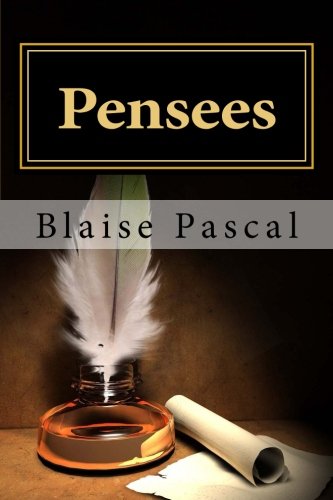
Pensees
by Blaise Pascal, W. F. Trotter
302 pages· 2013· ISBN 9781482045987
Rate this book:
No club is reading this yet — be the first to start one
About
This book, representing Pascal's 'pensees', or thoughts, contains many provocative views that have managed to arouse critics from many different perspectives. In many ways, Pascal's insights into human character as it relates to the divine are not easily dismissed, at least intellectually. Because Pensees is a collection of thoughts rather than a systematic presentation, the reader will likely find Pascal to be quite quotable. There are quite a few 'one liners' in here that are profound to the point of being humorous. Pascal, in arguing in favor of the truth of Christianity, makes a very big investment in fulfilled prophecy and the history of the Jews that readers should find interesting. His discourse on indifference at the beginning of the second section is exceptional: they have succeeded in providing a considerable amount of discomfort to atheists for three centuries now. The portion of Pensees that is the most well known is Pascal's wager argument early in the second section. Unfortunately, this argument is not the most compelling one made by Pascal, making it a shame that it has overshadowed his most provocative argument in favor of the Christian religion (the anthropological one). Section 1 of Pensees spends considerable time developing the notion that the extreme paradox of humanity (as Pascal sees it) of both immense greatness and horrible evil demand an explanation. How can man be both, and what worldview best explains this clear reality? These are the questions that Pascal presents, arguing that only the Biblical narrative of man from creation forward provides an intelligent framework upon which to explain the human condition adequately. It is a very provocative argument that a number of thoughtful theologians from Groothuis to McKenzie have opined upon, and an argument that deserves extensive thought not just about the Christian religion, but about the very nature of man and whether Pascal's grasp of it is correct or not. Being a Jansenist, Pascal was not as willing as mainstream Roman Catholicism to rely on human reason, believing that man's 'wretchedness' calls such reason into question. As such, the reader will notice that Pascal tends to employ a general polemic against reason, even though he clearly refutes the complete abandonment of reason. But as part of this general polemic, he clearly distrusts natural theology as well as the rationalizations of the philosophers (which is kind of ironic), believing that philosophical rationalizing is ultimately an impediment to faith. Pascal intends here to walk a fine line between what he believed to be the logical absurdity of faith in complete contradiction to reason, but also of the bankruptcy as he saw it of reason alone becoming the basis for our faith. All in all, Pensees is a highly provocative book that has, and will continue, to arouse thought and contemplation at the deepest levels.
Discuss Pensees with other readers
Join or start a book club for Pensees on Readfeed. Live chat, shared reading progress, and AI discussion questions — free to get started.
Frequently asked questions
How do I join a book club for Pensees?
Sign up free on Readfeed, then browse public clubs or start your own club with Pensees as the current read. Invite friends with a share link and discuss together with live chat and AI discussion questions.
Can I discuss Pensees with other readers online?
Yes. Readfeed book clubs let you chat live, share progress, and join discussions about Pensees with readers worldwide — whether your club is virtual, in-person, or hybrid.
Is Readfeed free?
Yes. Creating an account and joining book clubs is free. Sign up to find readers who love the same books and start discussing today.