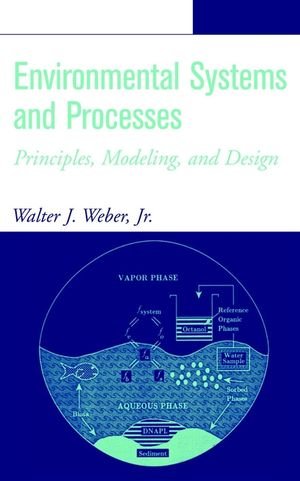
Environmental Systems and Processes: Principles, Modeling, and Design
by Walter J. Weber Jr., Jr.
Concern over environmental changes resulting from oversubscription and exploitation of Earth's resources is mounting. Acid rains from power generation and industrial process emissions to the atmosphere, contamination of water resources by spills and discharges of hazardous chemicals, the greenhouse and global warming effects of carbon dioxide generated by consumption of organic fuels, and the depletion of ecosystem stabilizers such as oxygen in lakes and streams overfertilized by human wastes; these are a few of the considerations facing environmental engineers and scientists today. These are complex and confounding processes and phenomena, and their effects vary widely among the virtually limitless number of environmental systems and subsystems on Earth. Environmental Systems and Processes: Principles, Modeling, and Design is the first book to explain that, although environmental systems are virtually limitless in number, change is controlled by a relatively small set of fundamental processes.
Written by one of the initiators and foremost proponents of the "first principles" approach to environmental system characterization and problem solving, this informative volume details how three fundamental issues lie at the base of every environmental process; i.e., the amount and form of available energy, the rate at which that energy can be exercised, and the configuration and dynamics of the system in which the process occurs. The author demonstrates how the mastering of relatively few fundamental principles can provide the reader with the tools necessary to solve a broad range of environmental problems.
Topics discussed in Environmental Systems and Processes: Principles, Modeling, and Design include: fluid flow and mass transport; passive and reactive interphase mass transfer; elementary and complex process rates; ideal, hybrid, and nonideal system modeling and design; and multiphase and interfacial process dynamics and design.
The unique and highly effective format of presenting several simple but essential fundamentals first, followed by detailed illustrative examples and explanations of how these principles describe various complex specific environmental systems and processes, makes Environmental Systems and Processes: Principles, Modeling, and Design a requisite for environmental sciences and engineering classrooms, and a staple for the bookshelves of all environmental professionals.
Discuss Environmental Systems and Processes: Principles, Modeling, and Design with other readers
Join or start a book club for Environmental Systems and Processes: Principles, Modeling, and Design on Readfeed. Live chat, shared reading progress, and AI discussion questions — free to get started.
Frequently asked questions
How do I join a book club for Environmental Systems and Processes: Principles, Modeling, and Design?
Sign up free on Readfeed, then browse public clubs or start your own club with Environmental Systems and Processes: Principles, Modeling, and Design as the current read. Invite friends with a share link and discuss together with live chat and AI discussion questions.
Can I discuss Environmental Systems and Processes: Principles, Modeling, and Design with other readers online?
Yes. Readfeed book clubs let you chat live, share progress, and join discussions about Environmental Systems and Processes: Principles, Modeling, and Design with readers worldwide — whether your club is virtual, in-person, or hybrid.
Is Readfeed free?
Yes. Creating an account and joining book clubs is free. Sign up to find readers who love the same books and start discussing today.