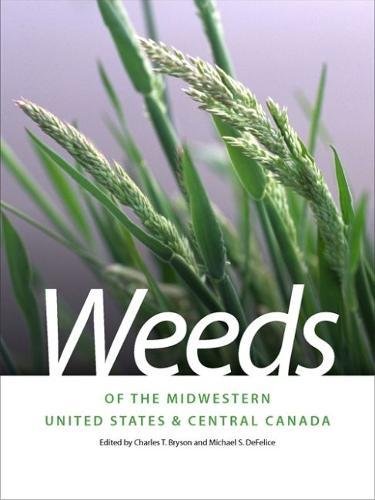
Weeds of the Midwestern United States and Central Canada (Wormsloe Foundation Nature Book Ser.)
by David Johnson, Jonathan Green, David Hall, James Chandler, John Boyd, B. Smith, Timothy Murphy, Robert Hayes, David Bridges, Steven Harrison, Charles Bryson, Michael DeFelice, Arlyn Evans, Alan F. Wiese, Brett Serviss, C. Monks, C. Elmore, Don Murray, E.J. Retzinger Jr., J. Stritzke, J. Keeling, Jennifer Goodlett, John Cardina, L. Oliver, Loyd Wax, Lynn. Sosnoskie, Mary Ketchersid, Mitchell Blair, Neil Hackett, Patricia Haragan, Roger Becker, Scott Fitterer, Shawn Askew, Terry Clason, Theodore Webster, Victor Maddox, Walter Skroch, John A. Pawlak, William Vencill, P. W. Jordan, C. H. Koger, R. G. Lym
No club is reading this yet — be the first to start one
Weeds threaten the safe, efficient, and sustainable production of food, feed, fiber, and biofuel throughout the world. Featuring more than fourteen hundred full-color photographs, this handy guide provides essential information on more than 350 of the most troublesome weedy and invasive plants found in the midwestern United States and central Canada.
Drawing on the expertise of more than forty weed scientists and botanists, the guide identifies each plant at various stages of its life and offers useful details about its origin, habitat, morphology, biology, distribution, and toxic properties. The book also includes illustrations of the most common characteristics of plants and terms used to describe them, a key to plant families included in the book, a glossary of frequently used terms, a bibliography, and indexes of scientific and common plant names.
This is an essential guide for agronomists, crop and soil scientists, horticulturists, botanists, Cooperative Extension Service agents, farmers, gardeners, students in agriculture and biology, lawn care professionals, green industry professionals, nursery owners, government quarantine workers, and land preservationists.
Each species account includes:
Up to four full-color photographs showing seed, seedling, plant, flower, and other unique plant features Distribution map For grasses, a line drawing of the collar, where the leaf joins the stem, an important identifying characteristic Scientific names, common names, and local synonyms of common names Vegetative characteristics for seedlings and leaves Special identifying characteristics Reproductive characteristics Toxic properties
States and provinces covered:
Illinois Indiana Iowa Kansas (northeastern) Kentucky (northern) Manitoba (southern half) Michigan Minnesota Missouri (upper half) Nebraska (eastern) North Dakota Ohio Ontario (southern half) Quebec (southwestern corner) Saskatchewan (southeastern) South Dakota (eastern half) Wisconsin
Discuss Weeds of the Midwestern United States and Central Canada (Wormsloe Foundation Nature Book Ser.) with other readers
Join or start a book club for Weeds of the Midwestern United States and Central Canada (Wormsloe Foundation Nature Book Ser.) on Readfeed. Live chat, shared reading progress, and AI discussion questions — free to get started.
Frequently asked questions
How do I join a book club for Weeds of the Midwestern United States and Central Canada (Wormsloe Foundation Nature Book Ser.)?
Sign up free on Readfeed, then browse public clubs or start your own club with Weeds of the Midwestern United States and Central Canada (Wormsloe Foundation Nature Book Ser.) as the current read. Invite friends with a share link and discuss together with live chat and AI discussion questions.
Can I discuss Weeds of the Midwestern United States and Central Canada (Wormsloe Foundation Nature Book Ser.) with other readers online?
Yes. Readfeed book clubs let you chat live, share progress, and join discussions about Weeds of the Midwestern United States and Central Canada (Wormsloe Foundation Nature Book Ser.) with readers worldwide — whether your club is virtual, in-person, or hybrid.
Is Readfeed free?
Yes. Creating an account and joining book clubs is free. Sign up to find readers who love the same books and start discussing today.