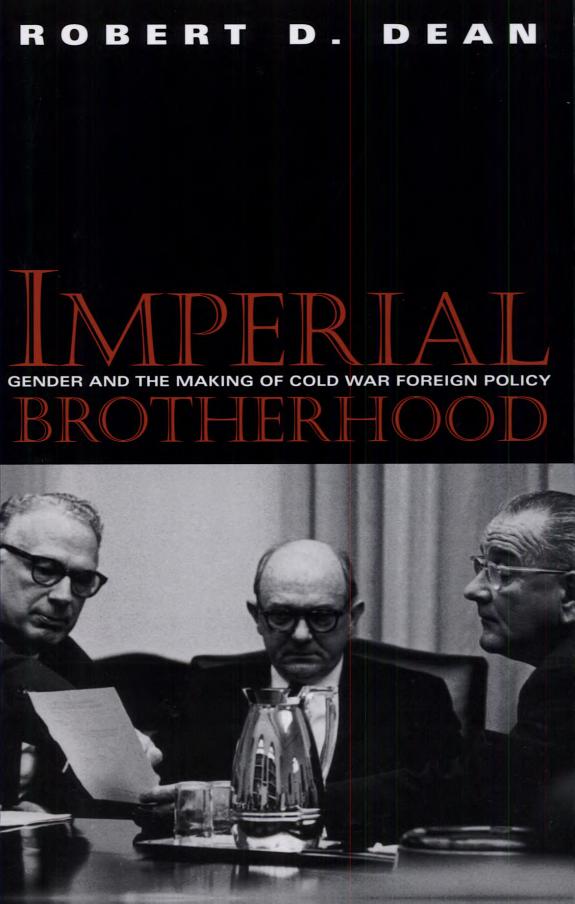
Imperial Brotherhood

Imperial Brotherhood

Gender and the Making of Cold War Foreign Policy

by Robert D. Dean

329 pages· 2003· ISBN 9781558494145

Browse books you can read free on Readfeed

No club is reading this yet — be the first to start one

Start a club free
About
This provocative book begins with a question about the Vietnam War. How is it, asks Robert D. Dean, that American policymakers--men who prided themselves on "hardheaded pragmatism" and shunned "fuzzy idealism"--could have committed the nation to such a ruinous, costly, and protracted war? The answer, he argues, lies not simply in the imperatives of anticommunist ideology or in any reasonable calculation of national interest. At least as decisive in determining the form and content of American Cold War foreign policy were the common background and shared values of its makers, especially their deeply ingrained sense of upper-class masculinity. Dean begins by examining the institutions that shaped the members of the U.S. foreign policy establishment--all-male prep schools, Ivy League universities, collegiate secret societies, and exclusive men's clubs--that instilled stoic ideals of competition, duty, and loyalty. Service in elite military units during World War II further reinforced this pattern of socialization, eventually creating an "imperial brotherhood" imbued with a common global vision. More than that, according to Dean, the commitment to tough-minded masculinity shared by these men encouraged the pursuit of policies that were aggressively interventionist abroad and intolerant of dissent at home. Applying his gendered analysis to the McCarthy era, Dean reveals how the purge of suspected homosexuals in the State Department not only paralleled the repression of the political left, but also reflected a bitter contest for power between the foreign policy elite and provincial Congressional conservatives. He then shows how issues of manliness similarly influenced the politics and policies of the Kennedy and Johnson administrations. Just as programs like the Peace Corps were grounded in ideals of masculine heroism, decisions about intervention in Vietnam were inextricably bound up with ideas about male strength and power. In the end, Dean makes a persuasive case that these elite constructions of male identity fundamentally shaped the course of American foreign policy during the early decades of the Cold War.

Discuss Imperial Brotherhood with other readers

Join or start a book club for Imperial Brotherhood on Readfeed. Live chat, shared reading progress, and AI discussion questions — free to get started.

Frequently asked questions

How do I join a book club for Imperial Brotherhood?

Sign up free on Readfeed, then browse public clubs or start your own club with Imperial Brotherhood as the current read. Invite friends with a share link and discuss together with live chat and AI discussion questions.

Can I discuss Imperial Brotherhood with other readers online?

Yes. Readfeed book clubs let you chat live, share progress, and join discussions about Imperial Brotherhood with readers worldwide — whether your club is virtual, in-person, or hybrid.

Is Readfeed free?

Yes. Creating an account and joining book clubs is free. Sign up to find readers who love the same books and start discussing today.