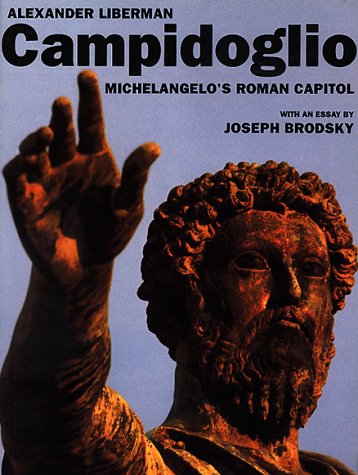
Campidoglio:: Michelangelo's Roman Capital
by Alexander Liberman
No club is reading this yet — be the first to start one
"Of all the Roman emperors, Marcus Aurelius gets the best press," Joseph Brodsky writes in the witty and profound essay that accompanies Liberman's photographs. "Historians love him, and so do philosophers." He was the model philosopher-king, remembered now mostly for his Meditations, writings on morality, virtue, and rationality. "If that book hasn't civilized us, what will?" Brodsky notes. A supplementary text on the art and architecture of the Campidoglio formed by Michelangelo into one of the most imposing architectural compositions of all time, a grand environment for the political life of a great city. Michelangelo's design for the Piazza del Campidoglio was one of the first efforts to make a public space in which all the elements function as a whole. At the center of a trapezoidal area, flanked by three palaces, was the ancient Roman equestrian statue of Marcus Aurelius, the second-century ruler who presided over the waning days of the empire. Alexander Liberman has photographed the statue and its environs in all kinds of light and from all angles over a period of years. The result is a stunning photographic essay on one of the most dramatic public monuments ever constructed.
"Of all the Roman emperors, Marcus Aurelius gets the best press," Joseph Brodsky writes in the witty and profound essay that accompanies Liberman's photographs. "Historians love him, and so do philosophers." He was the model philosopher-king, remembered now mostly for his Meditations, writings on morality, virtue, and rationality. "If that book hasn't civilized us, what will?" Brodsky notes. A supplementary text on the art and architecture of the Campidoglio has been contributed by Diane Kelder.
Discuss Campidoglio:: Michelangelo's Roman Capital with other readers
Join or start a book club for Campidoglio:: Michelangelo's Roman Capital on Readfeed. Live chat, shared reading progress, and AI discussion questions — free to get started.
Frequently asked questions
How do I join a book club for Campidoglio:: Michelangelo's Roman Capital?
Sign up free on Readfeed, then browse public clubs or start your own club with Campidoglio:: Michelangelo's Roman Capital as the current read. Invite friends with a share link and discuss together with live chat and AI discussion questions.
Can I discuss Campidoglio:: Michelangelo's Roman Capital with other readers online?
Yes. Readfeed book clubs let you chat live, share progress, and join discussions about Campidoglio:: Michelangelo's Roman Capital with readers worldwide — whether your club is virtual, in-person, or hybrid.
Is Readfeed free?
Yes. Creating an account and joining book clubs is free. Sign up to find readers who love the same books and start discussing today.