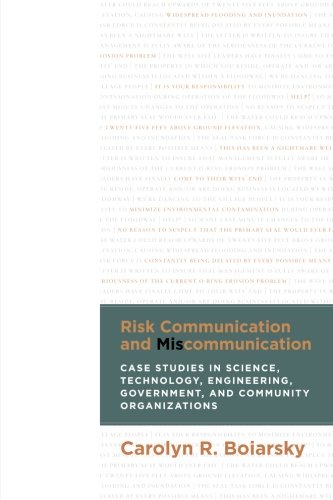
Risk Communication and Miscommunication: Case Studies in Science, Technology, Engineering, Government, and Community Organizations
by Carolyn Boiarsky
Drawing from research in rhetoric, linguistics, technical communication, educational psychology, and web design, Boiarsky provides a new way to look at risk communication. She shows how failing to consider the readers’ needs and the rhetorical context in which a document is read can be catastrophic and how anticipating those needs can enhance effectiveness and prevent disaster. She examines the communications and miscommunications of original e-mails, memos, and presentations about various environmental disasters, including the Columbia space shuttle breakup and the BP/Deepwater Horizon oil rig explosion, and successes, such as the Enbridge pipeline expansion and the opening of the Mississippi Spillway, offering recommendations for effective communication.
Taking into account the growing need to communicate complex and often controversial issues across vast geographic and cultural spaces with an ever-expanding array of electronic media, Risk Communication and Miscommunication provides strategies for clear communication of data, ideas, and procedures to varied audiences to prevent or minimize damage from environmental incidents.
Discuss Risk Communication and Miscommunication: Case Studies in Science, Technology, Engineering, Government, and Community Organizations with other readers
Join or start a book club for Risk Communication and Miscommunication: Case Studies in Science, Technology, Engineering, Government, and Community Organizations on Readfeed. Live chat, shared reading progress, and AI discussion questions — free to get started.
Frequently asked questions
How do I join a book club for Risk Communication and Miscommunication: Case Studies in Science, Technology, Engineering, Government, and Community Organizations?
Sign up free on Readfeed, then browse public clubs or start your own club with Risk Communication and Miscommunication: Case Studies in Science, Technology, Engineering, Government, and Community Organizations as the current read. Invite friends with a share link and discuss together with live chat and AI discussion questions.
Can I discuss Risk Communication and Miscommunication: Case Studies in Science, Technology, Engineering, Government, and Community Organizations with other readers online?
Yes. Readfeed book clubs let you chat live, share progress, and join discussions about Risk Communication and Miscommunication: Case Studies in Science, Technology, Engineering, Government, and Community Organizations with readers worldwide — whether your club is virtual, in-person, or hybrid.
Is Readfeed free?
Yes. Creating an account and joining book clubs is free. Sign up to find readers who love the same books and start discussing today.