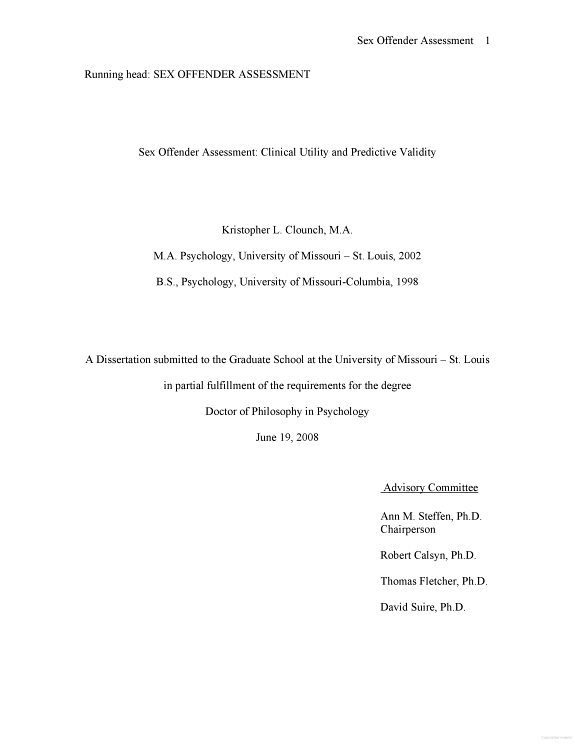
Sex Offender Assessment: Clinical Utility and Predictive Validity

Sex Offender Assessment: Clinical Utility and Predictive Validity

93 pages· 2008· ISBN 9780549752714
About
The research addressing sex offender assessment and treatment is an evere-volving science. However, very little research has addressed psychological typologies associated with various types of sex offenders and treatment engagement. The current study examined assessment data of four sex offender groups, defined by victim type, to determine if a typological difference exists between groups of (N = 583) rapists (n = 129), statutory offenders (n = 140), intrafamilial/incest perpetrators (n = 152), and extrafamilial (n = 162). Secondly, the study determined if a specific battery of psychological measures can predict treatment completion (n = 377). We also hypothesized there will be a negative relationship between psychopathy, as measured by the Hare Psychopathy Checklist-Screening Version, antisociality, aggression, and treatment rejection, as measured by the Personality Assessment Inventory, and treatment completion. As hypothesized, there were several significant differences seen between the sex offender groups. Rapists were significantly different from the other three sex offender groups and Extrafamilial Child Molester and Statutory Offender groups were similar to one another. The primary discriminating factors appeared to be the level of antisocial beliefs, attitudes and behaviors. Static-99 scores were highest for the Rapist group and post hoc analyses indicated that Extrafamilial Child Molesters with male or both sex victims had similar Static-99 scores to rapists. As hypothesized, psychopathy and PAI Antisocial and Aggression scales scores distinguished between treatment completers and non-completers, however, these variables were not predictive of treatment completion.

Discuss Sex Offender Assessment: Clinical Utility and Predictive Validity with other readers

Join or start a book club for Sex Offender Assessment: Clinical Utility and Predictive Validity on Readfeed. Live chat, shared reading progress, and AI discussion questions — free to get started.

Frequently asked questions

How do I join a book club for Sex Offender Assessment: Clinical Utility and Predictive Validity?

Sign up free on Readfeed, then browse public clubs or start your own club with Sex Offender Assessment: Clinical Utility and Predictive Validity as the current read. Invite friends with a share link and discuss together with live chat and AI discussion questions.

Can I discuss Sex Offender Assessment: Clinical Utility and Predictive Validity with other readers online?

Yes. Readfeed book clubs let you chat live, share progress, and join discussions about Sex Offender Assessment: Clinical Utility and Predictive Validity with readers worldwide — whether your club is virtual, in-person, or hybrid.

Is Readfeed free?

Yes. Creating an account and joining book clubs is free. Sign up to find readers who love the same books and start discussing today.