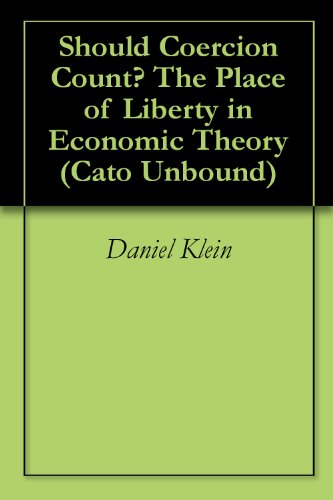
Should Coercion Count? The Place of Liberty in Economic Theory (Cato Unbound Book 52007)
by Daniel Klein, Edward Glaeser, Liam Murphy, Richard Epstein
In this month's thought-provoking lead essay George Mason economist Daniel Klein, editor of the academically muckraking Econ Journal Watch, argues that not only do considerations of coercion and liberty figure into economists' scientific judgment as a matter of fact, but that they ought to figure in with added clarity so that we can more directly and honestly consider the extent to which coercion is really worth it. Klein will face a wide-ranging array of eminent interlocutors, including NYU philosopher Liam Murphy, co-author (with Thomas Nagel) of The Myth of Ownership: Taxes and Justice; Harvard economist Edward Glaeser, editor of the Quarterly Journal of Economics; and University of Chicago law and economics powerhouse Richard Epstein, author of Skepticism and Freedom: A Modern Case for Classical Liberalism.
Discuss Should Coercion Count? The Place of Liberty in Economic Theory (Cato Unbound Book 52007) with other readers
Join or start a book club for Should Coercion Count? The Place of Liberty in Economic Theory (Cato Unbound Book 52007) on Readfeed. Live chat, shared reading progress, and AI discussion questions — free to get started.
Frequently asked questions
How do I join a book club for Should Coercion Count? The Place of Liberty in Economic Theory (Cato Unbound Book 52007)?
Sign up free on Readfeed, then browse public clubs or start your own club with Should Coercion Count? The Place of Liberty in Economic Theory (Cato Unbound Book 52007) as the current read. Invite friends with a share link and discuss together with live chat and AI discussion questions.
Can I discuss Should Coercion Count? The Place of Liberty in Economic Theory (Cato Unbound Book 52007) with other readers online?
Yes. Readfeed book clubs let you chat live, share progress, and join discussions about Should Coercion Count? The Place of Liberty in Economic Theory (Cato Unbound Book 52007) with readers worldwide — whether your club is virtual, in-person, or hybrid.
Is Readfeed free?
Yes. Creating an account and joining book clubs is free. Sign up to find readers who love the same books and start discussing today.