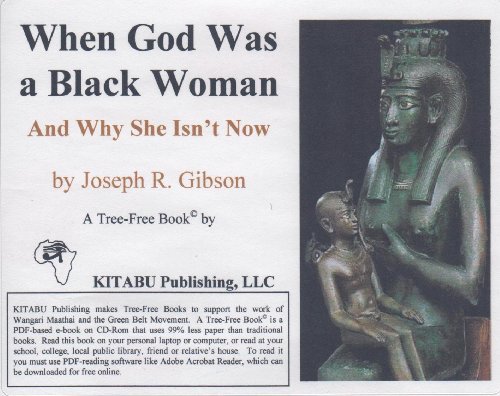
When God Was a Black Woman: And Why She Isn’t Now
by Joseph R. Gibson
No club is reading this yet — be the first to start one
As a critical thinker, I know that sometimes a lie is told when the truth is declared halfway or haphazardly. Stone, who happens to be a White female artist and college professor, never mentioned the racial make-up of the female divinities of the world’s earliest civilizations she wrote about. I don’t know understand how Stone could write a book about When God Was a Woman and then later write a book on Three Thousand Years of Racism, which focuses on uncovering evidence of racism imposed by Indo-Europeans after they conquered most of the same regions discussed in When God Was a Woman, and fail to connect the probability that the Goddesses she first wrote about were originally depicted as Black women. How can she admit that “historical, mythological and archaeological evidence suggests that it was these northern people who brought with them the concepts of light as good and dark as evil (very possibly the symbolism of their racial attitudes toward the darker people of the southern areas) and of a supreme male deity;” but not admit that the Goddess of theses Black people was also Black before they and She were conquered by White people (i.e., Indo-Europeans).
Whether this failing was accidental or intentional is irrelevant, yet one could assume that the Goddesses would originally resemble the people who worship them. According to Albert Churchward, “the earliest members of the human race appeared in the interior of the African continent about two million years ago, then from the region of the Great Lakes they spread over the entire continent. Groups of these early men wandered down the Nile Valley, settled in Egypt, and then later dispersed themselves to all parts of the world…As these early Africans wandered over the world, they differentiated into the various human subspecies that now inhabit our planet. The men who remained in the tropical and equatorial regions retained their dark complexions, whereas those that settled in the temperate zones lost a portion of their dusky pigmentation and developed a fairer skin.” Provided that the original racial profile of the Nile, Indus, and Tigris-Euphrates River Valley as well as the Aegean civilizations has been clandestinely confirmed as Black/African, then the female divinities worshipped in these civilizations should also logically be Black/African. Accordingly, in the beginning, to revise Stone, God was a Black woman.
Discuss When God Was a Black Woman: And Why She Isn’t Now with other readers
Join or start a book club for When God Was a Black Woman: And Why She Isn’t Now on Readfeed. Live chat, shared reading progress, and AI discussion questions — free to get started.
Frequently asked questions
How do I join a book club for When God Was a Black Woman: And Why She Isn’t Now?
Sign up free on Readfeed, then browse public clubs or start your own club with When God Was a Black Woman: And Why She Isn’t Now as the current read. Invite friends with a share link and discuss together with live chat and AI discussion questions.
Can I discuss When God Was a Black Woman: And Why She Isn’t Now with other readers online?
Yes. Readfeed book clubs let you chat live, share progress, and join discussions about When God Was a Black Woman: And Why She Isn’t Now with readers worldwide — whether your club is virtual, in-person, or hybrid.
Is Readfeed free?
Yes. Creating an account and joining book clubs is free. Sign up to find readers who love the same books and start discussing today.