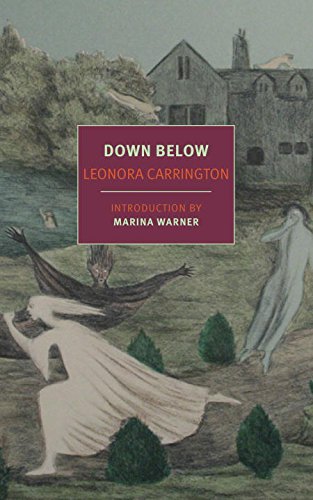
Down Below (NYRB Classics)
by Leonora Carrington
112 pages· 2017· ISBN 9781681370606
About
A stunning work of memoir and an unforgettable depiction of the brilliance and madness by one of Surrealism's most compelling figures
In 1937 Leonora Carrington—later to become one of the twentieth century’s great painters of the weird, the alarming, and the wild—was a nineteen-year-old art student in London, beautiful and unapologetically rebellious. At a dinner party, she met the artist Max Ernst. The two fell in love and soon departed to live and paint together in a farmhouse in Provence.
In 1940, the invading German army arrested Ernst and sent him to a concentration camp. Carrington suffered a psychotic break. She wept for hours. Her stomach became “the mirror of the earth”—of all worlds in a hostile universe—and she tried to purify the evil by compulsively vomiting. As the Germans neared the south of France, a friend persuaded Carrington to flee to Spain. Facing the approach “of robots, of thoughtless, fleshless beings,” she packed a suitcase that bore on a brass plate the word Revelation.
This was only the beginning of a journey into madness that was to end with Carrington confined in a mental institution, overwhelmed not only by her own terrible imaginings but by her doctor’s sadistic course of treatment. In Down Below she describes her ordeal—in which the agonizing and the marvelous were equally combined—with a startling, almost impersonal precision and without a trace of self-pity. Like Daniel Paul Schreber’s Memoirs of My Nervous Illness, Down Below brings the hallucinatory logic of madness home.
In 1937 Leonora Carrington—later to become one of the twentieth century’s great painters of the weird, the alarming, and the wild—was a nineteen-year-old art student in London, beautiful and unapologetically rebellious. At a dinner party, she met the artist Max Ernst. The two fell in love and soon departed to live and paint together in a farmhouse in Provence.
In 1940, the invading German army arrested Ernst and sent him to a concentration camp. Carrington suffered a psychotic break. She wept for hours. Her stomach became “the mirror of the earth”—of all worlds in a hostile universe—and she tried to purify the evil by compulsively vomiting. As the Germans neared the south of France, a friend persuaded Carrington to flee to Spain. Facing the approach “of robots, of thoughtless, fleshless beings,” she packed a suitcase that bore on a brass plate the word Revelation.
This was only the beginning of a journey into madness that was to end with Carrington confined in a mental institution, overwhelmed not only by her own terrible imaginings but by her doctor’s sadistic course of treatment. In Down Below she describes her ordeal—in which the agonizing and the marvelous were equally combined—with a startling, almost impersonal precision and without a trace of self-pity. Like Daniel Paul Schreber’s Memoirs of My Nervous Illness, Down Below brings the hallucinatory logic of madness home.
Discuss Down Below (NYRB Classics) with other readers
Join or start a book club for Down Below (NYRB Classics) on Readfeed. Live chat, shared reading progress, and AI discussion questions — free to get started.
Frequently asked questions
How do I join a book club for Down Below (NYRB Classics)?
Sign up free on Readfeed, then browse public clubs or start your own club with Down Below (NYRB Classics) as the current read. Invite friends with a share link and discuss together with live chat and AI discussion questions.
Can I discuss Down Below (NYRB Classics) with other readers online?
Yes. Readfeed book clubs let you chat live, share progress, and join discussions about Down Below (NYRB Classics) with readers worldwide — whether your club is virtual, in-person, or hybrid.
Is Readfeed free?
Yes. Creating an account and joining book clubs is free. Sign up to find readers who love the same books and start discussing today.