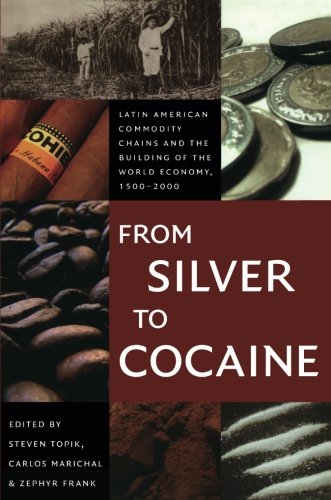
From Silver to Cocaine: Latin American Commodity Chains and the Building of the World Economy, 1500–2000 (American Encounters/Global Interactions)
Latin American Commodity Chains and the Building of the World Economy, 1500–2000
by Zephyr Frank, Steven Topik, Carlos Marichal
No club is reading this yet — be the first to start one
By focusing on changing patterns of production and consumption over time, the contributors reconstruct complex webs of relationships and economic processes, highlighting Latin America’s central and interactive place in the world economy. They show how changes in coffee consumption habits, clothing fashions, drug usage, or tire technologies in Europe, Asia, and the Americas reverberate through Latin American commodity chains in profound ways. The social and economic outcomes of the continent’s export experience have been mixed. By analyzing the dynamics of a wide range of commodities over a five-hundred-year period, From Silver to Cocaine highlights this diversity at the same time that it provides a basis for comparison and points to new ways of doing global history.
Contributors. Marcelo Bucheli, Horacio Crespo, Zephyr Frank, Paul Gootenberg, Robert Greenhill, Mary Ann Mahony, Carlos Marichal, David McCreery, Rory Miller, Aldo Musacchio, Laura Nater, Ian Read, Mario Samper, Steven Topik, Allen Wells
Discuss From Silver to Cocaine: Latin American Commodity Chains and the Building of the World Economy, 1500–2000 (American Encounters/Global Interactions) with other readers
Join or start a book club for From Silver to Cocaine: Latin American Commodity Chains and the Building of the World Economy, 1500–2000 (American Encounters/Global Interactions) on Readfeed. Live chat, shared reading progress, and AI discussion questions — free to get started.
Frequently asked questions
How do I join a book club for From Silver to Cocaine: Latin American Commodity Chains and the Building of the World Economy, 1500–2000 (American Encounters/Global Interactions)?
Sign up free on Readfeed, then browse public clubs or start your own club with From Silver to Cocaine: Latin American Commodity Chains and the Building of the World Economy, 1500–2000 (American Encounters/Global Interactions) as the current read. Invite friends with a share link and discuss together with live chat and AI discussion questions.
Can I discuss From Silver to Cocaine: Latin American Commodity Chains and the Building of the World Economy, 1500–2000 (American Encounters/Global Interactions) with other readers online?
Yes. Readfeed book clubs let you chat live, share progress, and join discussions about From Silver to Cocaine: Latin American Commodity Chains and the Building of the World Economy, 1500–2000 (American Encounters/Global Interactions) with readers worldwide — whether your club is virtual, in-person, or hybrid.
Is Readfeed free?
Yes. Creating an account and joining book clubs is free. Sign up to find readers who love the same books and start discussing today.