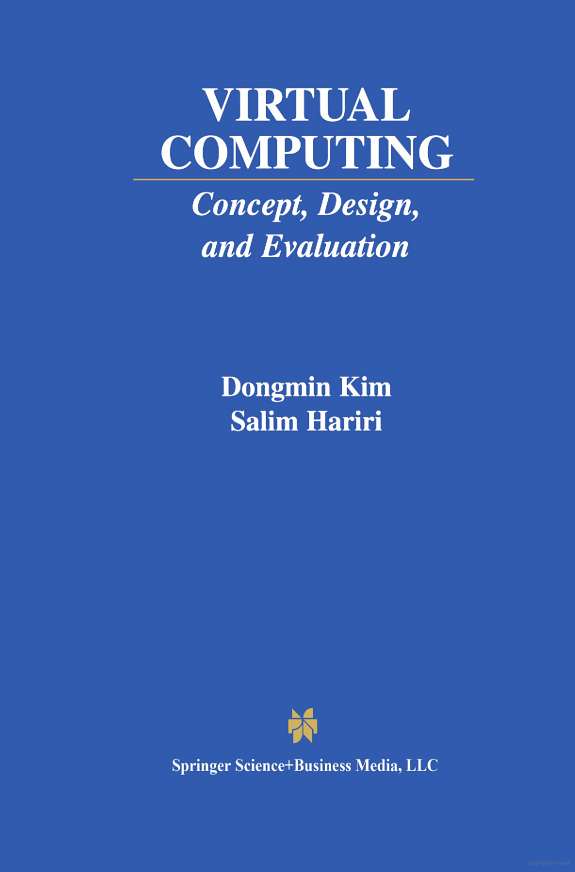
Virtual Computing
Concept, Design, and Evaluation
by Dongmin Kim, Salim Hariri
124 pages· 2012· ISBN 9781461515531
About
The evolution of modern computers began more than 50 years ago and has been driven to a large extend by rapid advances in electronic technology during that period. The first computers ran one application (user) at a time. Without the benefit of operating systems or compilers, the application programmers were responsible for managing all aspects of the hardware. The introduction of compilers allowed programmers to express algorithms in abstract terms without being concerned with the bit level details of their implementation. Time sharing operating systems took computing systems one step further and allowed several users and/or applications to time share the computing services of com puters. With the advances of networks and software tools, users and applications were able to time share the logical and physical services that are geographically dispersed across one or more networks. Virtual Computing (VC) concept aims at providing ubiquitous open computing services in analogous way to the services offered by Telephone and Elec trical (utility) companies. The VC environment should be dynamically setup to meet the requirements of a single user and/or application. The design and development of a dynamically programmable virtual comput ing environments is a challenging research problem. However, the recent advances in processing and network technology and software tools have successfully solved many of the obstacles facing the wide deployment of virtual computing environments as will be outlined next.
Discuss Virtual Computing with other readers
Join or start a book club for Virtual Computing on Readfeed. Live chat, shared reading progress, and AI discussion questions — free to get started.
Frequently asked questions
How do I join a book club for Virtual Computing?
Sign up free on Readfeed, then browse public clubs or start your own club with Virtual Computing as the current read. Invite friends with a share link and discuss together with live chat and AI discussion questions.
Can I discuss Virtual Computing with other readers online?
Yes. Readfeed book clubs let you chat live, share progress, and join discussions about Virtual Computing with readers worldwide — whether your club is virtual, in-person, or hybrid.
Is Readfeed free?
Yes. Creating an account and joining book clubs is free. Sign up to find readers who love the same books and start discussing today.